People hire a lawyer at a stressful moment. The website should lower the temperature, not raise it.
From $1,900. First version in 7 days. You approve it before you pay the balance, and you own the files.Websites for law firms, solo practitioners and legal consultancies.
Let’s book a free chat.
Free 20-minute chat. Manon reads every message herself, no sales team, no pressure.
Someone looking for a lawyer usually has a problem they didn't choose. A good law firm website tells them three things fast: you handle this kind of matter, you're credible, and enquiring is safe.
Creative Baguette builds websites for law firms, solo practitioners and legal consultancies that need to look established without sounding like a legal textbook.
Decoder Network·Professional-service website experience·★★★★★ 5.0 on Google
/ Decoder Network, one of ours
What clients say
Increased Traffic and Enquiries
Creative Baguette redesigned our website to better meet business needs, resulting in increased traffic and enquiries.
The team's design repositioned our brand with clearer messaging and delivered a secure, intuitive, and high-performing platform.
Credibility is the product. Clarity is how you show it.
Most law firm websites fail the same way: practice areas written for other lawyers, a wall of credentials, and no obvious next step. The visitor can't tell if you handle their matter, so they keep looking.
The fix isn't more words. It's plain-English practice areas, real people with faces and names, and an enquiry pathway that feels confidential and commits them to nothing.
What potential clients need to see
A safe way to enquire
Confidential, no obligation
A clear pathway that asks only what's needed to route the matter, and says plainly that enquiring commits them to nothing.
Practice areas in plain English
Their problem, their words
"I'm buying a house" and "we're separating", not just conveyancing and family law. Clients search for their problem, not your category.
Who they'll deal with
Faces and names
Real profiles that explain experience and approach, so a stressed visitor knows who is on the other end of the enquiry.
Fees, handled honestly
Even a range beats silence
How fees work — fixed fee, hourly, first-consult terms — stated as clearly as the rules allow. Silence on money loses enquiries.
What we build
Practice area pages that rank
One matter type, one page
Each practice area gets its own clear page, structured for the way people actually search for legal help.
Copy within the rules
Conduct rules respected
Written with professional conduct advertising rules in mind — including the rules around the word "specialist".
Credibility, not clutter
Proof placed where it matters
Admissions, memberships, results and recognition presented cleanly, without the wall-of-credentials effect.
Secure, fast, professional
The basics, done properly
Fast pages, working forms, SSL and sensible privacy handling. A slow or broken site reads as a slow or broken firm.
Lawyer website design for solo practitioners and small firms
Most of the firms we talk to aren't the top-tier city practices. They're a principal and a few staff, or a solo practitioner whose reputation has carried them this far by referral. Lawyer website design at that scale has one job: make the firm look as established online as it is in the room, so a referred client's first Google search confirms the recommendation instead of undermining it.
Web design for law firms also has quirks other industries don't: advertising rules that vary by state, the "specialist" wording trap, client confidentiality shaping what a testimonial can say, and matters that are too sensitive for a chirpy chatbot. We build within those constraints as standard rather than discovering them after launch.
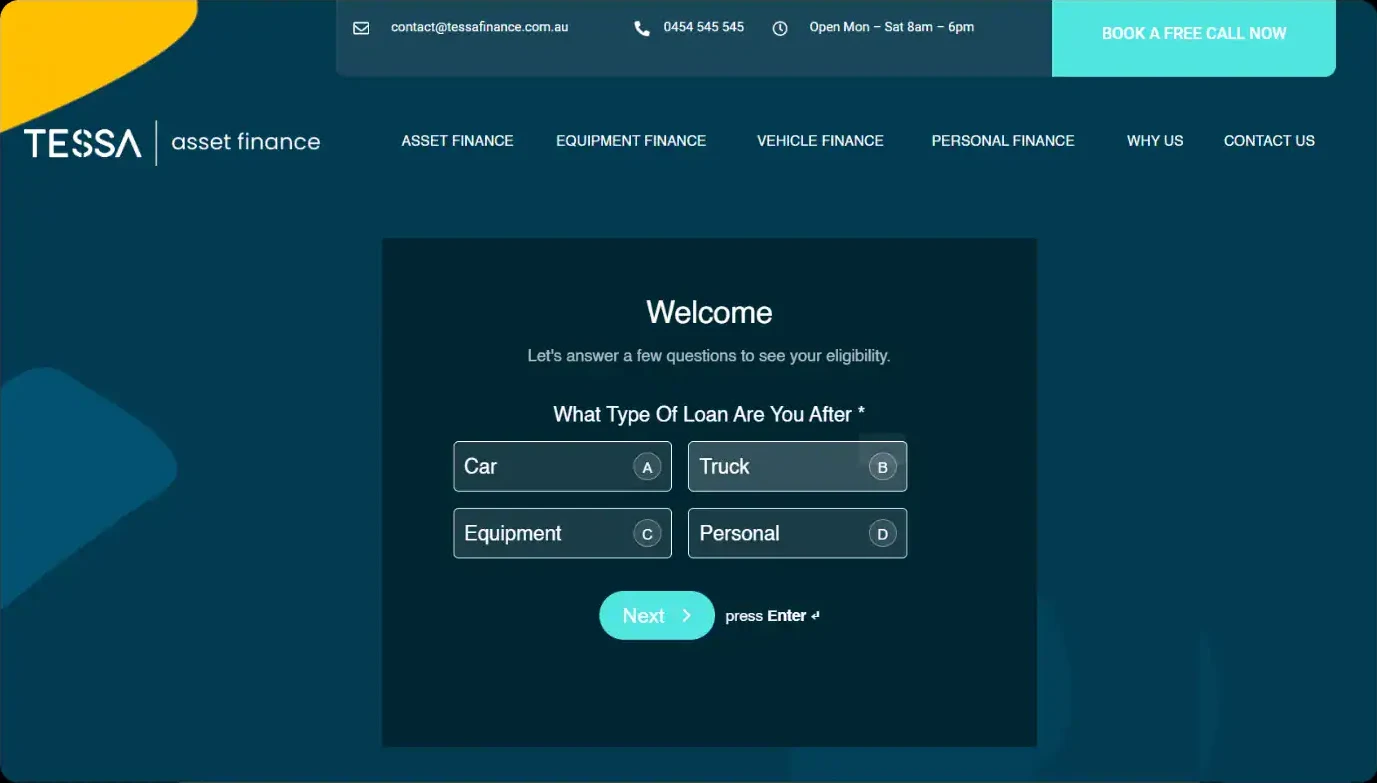
Michael de Palo — a lawyer and accountant, and co-founder of consulting firm Decoder Network — came to us with exactly this brief: reposition the brand, make the messaging clearer, keep it secure and professional. More traffic and more enquiries followed. That's the pattern: clarity first, credibility visible, enquiry easy.
What a practice-area page should actually say
Most web design for law firms treats practice areas as a menu: family law, wills and estates, commercial, done. But the person reading it isn't shopping from a menu. They have one problem, and the page either speaks to it or it doesn't.
A practice-area page that earns the enquiry does five things:
Names the situation, not just the category. "We help separating couples reach parenting arrangements" reaches someone the phrase "family law services" never will. The category word can stay for Google; the situation sentence is for the human.
Says what happens first. The first meeting, what to bring, whether the first conversation costs anything. Uncertainty about the process is half the reason people delay calling a lawyer at all.
Shows the person who handles it. A name, a face and two honest sentences of experience beat a firm-wide credentials paragraph. People hire the lawyer, then the firm.
Handles fees like an adult. Fixed fee, hourly, or "it depends, and here's what it depends on". Any of these beats silence. Silence reads as expensive.
Ends with one next step. Not four buttons. One: call, or send a confidential enquiry. The page's whole job was earning that click.
That structure is also why practice-area pages rank: each one becomes the answer to a specific search — "parenting arrangement lawyer", "contesting a will" — instead of one homepage trying to rank for everything. It's the same one-matter-one-page discipline we apply to every law firm website we build.
Tell us about the firm, the matters you want more of, and what the current website gets wrong.
No brief. No final copy. No knowing the technical answer.
2/
One focused project meeting
Once you proceed, we map practice areas, profiles, fee wording and the enquiry pathway.
You usually see the first version within one week.
3/
Refinement and launch
We refine it with your feedback. We do not go live until you're happy.
Afterwards, we keep it hosted, maintained and updated.
Priced like good advice: clear, upfront.
Focused landing pages start from $700.
Complete law firm websites commonly sit between $1,900 and $3,800.
Care plans from $97/month after launch.
You approve the site before final payment — and you own the files.
Legal-web specialists commonly quote $5,000 to $25,000+ for the same brief. Ours stays sensible because one person owns the project from structure to launch.
Focused landing pages start from $700. Complete law firm websites commonly sit between $1,900 and $3,800, depending on practice areas, profiles and integrations.
We write with professional conduct advertising rules in mind, including the rules around the word "specialist".
The practitioner remains responsible for final regulatory and legal approval of all published content — we make that review easy rather than pretending it isn't needed.
Can clients enquire confidentially?
Yes.
We build enquiry pathways that ask only what's needed to route the matter, and state plainly that the enquiry is confidential and creates no obligation.
What should the website actually include?
Plain-English practice areas, real practitioner profiles, honest fee information and one obvious way to enquire.